close

AILET 2026 Answer Key – Download Official PDF

The AILET 2026 Answer Key is one of the most awaited documents for law aspirants who appeared for the All India Law Entrance Test (AILET) 2026, conducted by National Law University (NLU), Delhi. The answer key allows candidates to verify their responses, estimate their scores, and assess their chances of securing admission to NLU Delhi.

How to Download the AILET 2026 Answer Key

You can download Provisional Answer key from Clat Possible Here.

Once released, you can download the official answer key (PDF) from the NLU Delhi website:

Go to: nationallawuniversitydelhi.in

Navigate to the Notifications / AILET section.

Look for links titled:

AILET 2026 Provisional Answer Key

AILET 2026 Final Answer Key

AILET 2026 Exam Analysis : Paper Pattern, Difficulty Level & Cutoff

Exam Name: AILET 2026 (All India Law Entrance Test)

Conducting Authority: National Law University, Delhi (NLU Delhi)

Course: BA LLB (Hons) & LLM

Exam Mode: Offline (Pen & Paper)

Exam Overview

Expert Analysis of AILET 2026


150 questions – separate sections for English and CR and GK

    1. 2 hours
    2. 3 sections – English, Logical Reasoning, GK
    3. English – 50 questions over 6 passages
    4. GK – 30 questions standard non passage based
    5. Logical Reasoning – 70 questions from CR, AR (10) and Legal (4)
Break -UP Of Marks
Section Subject Question. No. Marks
Part- 1,

Section – A

English 1-50 50
Part – 1,

Section – B

Logical Reasoning 81- 150 70
Part – 2 Current Affairs and General Knowledge 51-80 30
Total marks 150

Overall Analysis

1.Paper was reasonably lengthy with only passages in English.
2.Style of the questions traditional. No radical changes like 2023 this time
3.Overall question level was easy.
4.Cut off is expected to be higher or equal to last year.
5.GK was direct with mixed questions consisting of Current Affairs and Static GK
6.Higher accuracy is needed to clear to make the cut.
Passage Topics

All genres of reading touched upon

1.Democracy
2.AI
3.Urban gardening
4.Social Media
5.Comparative Essays on Law and Ethics
6.Story
Section : English
Level of Difficulty Overall
S.N. Types of Questions Questions Level of Difficulty
1. Fact Based 23 Easy to Moderate
2. Inference 3-4 Easy
3. Main idea and main Idea like 7 – 10
4. Strengthen And Weaken 2 Easy
5. Assumption 2 Easy
6. Assertion Reason 6 Moderate
7. Inferential Vocabulary 6-7 Easy to Moderate

Total Questions : 50

VERY GOOD SCORE : 42 -45

•Several logical reasoning based Questions though easy
• Most questions required a minute’s reading
•Vocabulary based questions were completely knowledge based
Section: General Knowledge
Level of Difficulty Overall
S.N. Types of Questions Questions Level of Difficulty
1. Sports (IPL, Wimbledon) 2 Easy
2. Art & Culture 3 Moderate – Difficult
3. Geography 2 Moderate
4. Indian Polity 1 Moderate – Difficult
5. Science and Tech 8 Moderate – Difficult
6. Days 1 Easy
7. Awards 5 Easy – Moderate
8. Space 0
9. Defence 2 Easy
10. Miscellaneous 2 Moderate
11. International Relations 4 Very Easy

TOTAL 30 QUESTIONS (Part 2 of the paper, Questions from 51 to 80):

GOOD SCORE: 17-19

If you’re getting 20+, then you have done an Excellent Job.

A typical AILET GK Section with combination of Current Affairs + Static GK questions

Total questions = 30

Current Affairs = 18 including 3-4 questions which are contemporary, but ranging beyond one year.

Static GK = 12

Questions were a mix of national events/international events/sports etc.

Many questions from the background or context of the current affairs events were asked.

Overall level of difficulty of GK section = Easy to Moderate

Good Attempts = 20-22 questions out of total 30 GK questions

Good Score = 17-19

Section: Logical Reasoning

Level of Difficulty Overall: Easy to Moderate
S.N. Types of Questions Questions Level of Difficulty
1. Analytical Reasoning 7
CR 55 Easy to Moderate
Word analogy 2 Moderate
Legal 4 Easy to Moderate


S.N. Types of Questions
2. Critical Reasoning
A. Inference
B. Strengthen
C. Weaken
D. Assumption
E. Syllogisms and Conditionlas

Critical Reasoning : TOTAL 70 QUESTIONS

GOOD SCORE: 57-58

Cut Off: 50-52

Reading the passage and comprehending it has assumed critical importance.

Only some of the questions could have been attempted without a thorough reading of the passage.


Expected Cutoffs

Section No. of Questions Good Score Level of Difficulty
English 51 40-45 Easy to Moderate
Current Awareness 30 16-18 Moderate to Difficult
Logical Reasoning 7(AR) + 55(CR) 57-60 Easy to moderate
Total 150 113-123 Easy -Moderate

The AILET 2026 exam is one of the most competitive law entrance exams in India, conducted exclusively for admission to NLU Delhi. As the exam approaches, aspirants are actively searching for a reliable AILET 2026 exam analysis to understand the expected paper pattern, difficulty level, important sections, and scoring strategy.

This exam AILET 2026 analysis is designed to help aspirants prepare smartly and also serves as an early-indexed resource for accurate post-exam updates.


First Impressions of AILET 2026

Expert Analysis of AILET 2026


All the best for AILET 2026! 🎓

Total Seats in NLUs for CLAT 2026: UG & PG (All Categories)

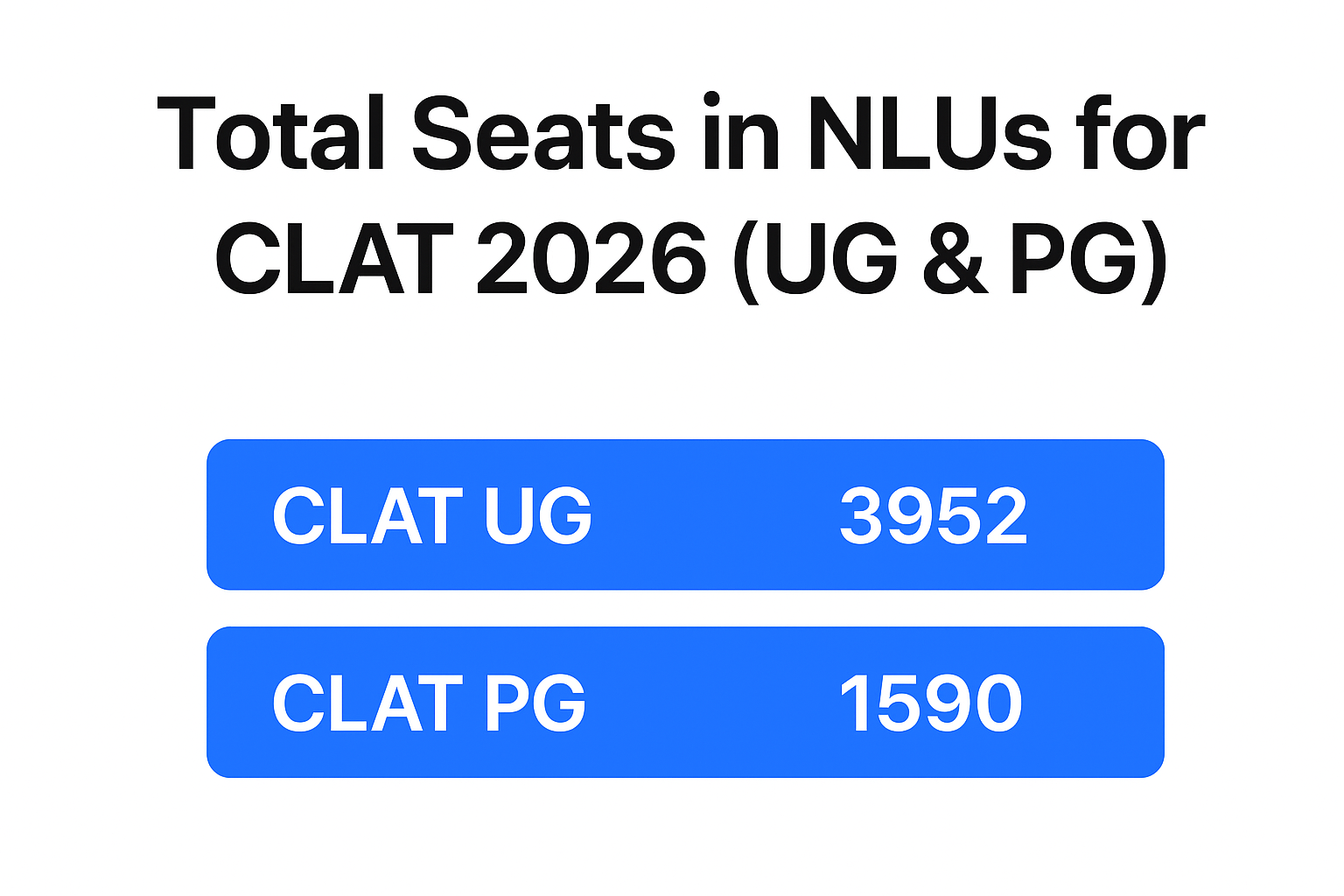
The total seats in NLUs for CLAT 2026 are 3,952 for five-year UG programmes and 1,590 for PG (LLM) programmes. Below you’ll find the full seat matrix (UG & PG), general-category breakdown, top and smaller NLUs by intake, and practical tips on how seat distribution affects cut-offs and counselling choices.

At a glance

Programme Total NLU Seats
CLAT UG (5-year) 3952
CLAT PG (LLM) 1590

NLU Seats in CLAT UG 2026 (All NLUs)

Total UG Seats = 3952

NLU Name UG Seats
NLSIU Bangalore 310
NALSAR Hyderabad 132
NLIU Bhopal 202
NUJS Kolkata 182
NLU Jodhpur 196
HNLU Raipur 180
GNLU Gandhinagar 172
GNLU Silvassa 66
RMLNLU Lucknow 191
RGNUL Punjab 180
CNLU Patna 138
NUALS Kochi 60
NLUO Odisha 180
NUSRL Ranchi 201
NLUJA Assam 120
DSNLU Visakhapatnam 132
TNNLU Tiruchirappalli 120
MNLU Mumbai 100
MNLU Nagpur 240
MNLU Aurangabad 120
HPNLU Shimla 180
DNLU Jabalpur 120
DBRANLU Haryana 120
NLUT Agartala 60
RPNLUP Prayagraj 60
IIULER Goa 180

NLU Seats for CLAT PG 2026 (LLM)

Total PG Seats = 1590

NLU Name PG Seats
NLSIU Bangalore 60
NALSAR Hyderabad 66
NLIU Bhopal 60
NUJS Kolkata 100
NLU Jodhpur 88
HNLU Raipur 90
GNLU Gandhinagar 57
GNLU Silvassa 33
RMLNLU Lucknow 55
RGNUL Punjab 80
CNLU Patna 66
NUALS Kochi 60
NLU Odisha 50
NUSRL Ranchi 69
NLUJA Assam 40
DSNLU Visakhapatnam 66
TNNLU Tiruchirappalli 60
MNLU Mumbai 50
MNLU Nagpur 60
MNLU Aurangabad 60
HPNLU Shimla 80
DNLU Jabalpur 60
DBRANLU Haryana 60
NLUT Agartala 50
RPNLUP Prayagraj 10
IIULER Goa 60

General Category Seats (UG & PG)

General category seats — UG: 1752, PG: 723

NLU General UG General PG
NLSIU Bangalore 121 24
NALSAR Hyderabad 66 33
NLIU Bhopal 78 30
NUJS Kolkata 99 67
NLU Jodhpur 85 41
HNLU Raipur 91 45
GNLU Gandhinagar 79 26
GNLU Silvassa 31 16
RMLNLU Lucknow 80 20
RGNUL Punjab 134 60
CNLU Patna 56 26
NUALS Kochi 20 20
NLU Odisha 128 34
NUSRL Ranchi 90 30
NLUJA Assam 60 20
DSNLU Visakhapatnam 55 27
TNNLU Tiruchirappalli 34 18
MNLU Mumbai 27 12
MNLU Nagpur 51 17
MNLU Aurangabad 34 17
HPNLU Shimla 138 46
DNLU Jabalpur 60 30
DBRANLU Haryana 40 20
NLUT Agartala 31 25
RPNLUP Prayagraj 24 4
IIULER Goa 40 15

Top takeaways

  • Top NLUs commonly have 180–310 UG seats; NLSIU leads with 310 UG seats.
  • General seats form ~44% of total intake — domicile and reserved categories take the rest.
  • PG competition is intense — top NLUs offer the majority of LLM seats.

Quick links

CLAT Result 2026
CLAT Cut Off 2026
CLAT Counselling 2026

Top 10 NLUs (Highest total seats)

NLU UG PG Total
NLSIU Bangalore 310 60 370
MNLU Nagpur 240 60 300
NLIU Bhopal 202 60 262
NUSRL Ranchi 201 69 270
NLU Jodhpur 196 88 284
RMLNLU Lucknow 191 55 246
NUJS Kolkata 182 100 282
RGNUL Punjab 180 80 260
HNLU Raipur 180 90 270
IIULER Goa 180 60 240

NLUs with the fewest total seats

NLU UG PG Total
RPNLUP Prayagraj 60 10 70
NUALS Kochi 60 60 120
NLUT Agartala 60 50 110
MNLU Mumbai 100 50 150
GNLU Silvassa 66 33 99

Tips for Aspirants Targeting Top NLU Seats

  1. Focus on rank requirements over seat count: High-seat NLUs still close at top ranks due to reputation and placements.
  2. Prioritise long-term ROI: Look at placement consistency, internships, and alumni network.
  3. Consider newer NLUs: Smaller batches can have rapidly improving records and opportunities.
  4. Study course structure & faculty: A specialised faculty can be decisive for certain law careers.
  5. Factor in domicile quotas: Many NLUs reserve a significant share for state domicile candidates — this affects All-India seats.

FAQs — CLAT 2026 Total Seats

How many total UG seats are there in NLUs?

Across all NLUs participating in CLAT, there are 3952 UG seats for the 5-year programme.

How many PG seats are there in NLUs?

NLUs offer a combined 1590 LLM seats (1-year & 2-year).

Do all NLUs offer BA LLB?

Yes — the flagship BA LLB (Hons.) is offered by all NLUs. Some also run BBA LLB, BCom LLB, or BSc LLB.

How many NLUs accept CLAT?

27 NLUs accept CLAT scores for UG/PG admissions. NLU Delhi conducts AILET separately.

Do NLUs have management quotas?

No. NLUs do not have any management quota; most seats are filled through CLAT, AILET, or NRI/Foreign national routes.

For detailed cut-offs, counselling dates, and rank-to-marks mapping, check our other resources: CLAT Cut Off 2026, CLAT Counselling 2026, CLAT Marks vs Rank.

CLAT Answer Key 2026 : Download PDF

The CLAT 2026 Answer key  is published on 7th Dec 2025 after the CLAT 2026 exam. You will find the complete CLAT  answer key solved by our mentors, and the original Answer key provided by the CLAT Consortium.

These key will help  you in calculate the estimated score and predict your rank. We will update all information related with CLAT 2026 answer key here.

The CLAT Possible Answer Key for CLAT 2026 is now available for students who appeared for the exam. Our academic team has analysed the entire paper, verified the solutions, and prepared the most reliable set-wise answer key to help you accurately calculate your expected score.


CLAT Possible has been India’s trusted CLAT preparation institute for over a decade, and our post-exam answer key is known for its accuracy, clarity, and detailed analysis.


CLAT 2026 Paper Analysis: First Impressions, Difficulty Level, Good Attempts & Expected Cutoff

The Common Law Admission Test (CLAT) 2026 has concluded, and aspirants across the country are buzzing with reactions. To help students, parents, and teachers understand the exam better, we have compiled a detailed CLAT 2026 paper analysis, including first impressions, section-wise difficulty, key takeaways, surprises, good attempts, and expected cutoff trends.

CLAT 2026: First Impressions

Based on feedback from students and experts, CLAT 2026 was:

  • Paper was lengthy. Attempt could have been 110+ for good score and overall 104+
  • Overall paper was easy to moderate.
  • Tricky questions that were there in spurts in different sections will decide ranks
  • Cut off is expected to be in and around or even more than last year.
  • Good general awareness was key
  • CR did the missing act!! So much for a reading based paper!!

Students found the paper doable but lengthy, making time management the biggest challenge.

🔹 Overall Difficulty Level (Section-wise)

Section Difficulty Key Highlights

English Easy Central Idea based Questions,Meaning in Contex,2 figure of speech, very few inference and Rc based Question

Current Affairs & GK Easy to Moderate US Policies, H1B, MAGA, Tariffs,⁠⁠Chess, Grandmaster, Chess Champion First, AI, WC, ⁠⁠Pahalgam, Indus, SAARC, ⁠⁠SCO, Tianjin, Chabahar, ⁠⁠Air India Crash

Quantitative Techniques Easy to Moderate 2 set, 6 Questions each, All Passage based, no visual data,One Set Super easy and one Set Calculations Heavy

Logical Reasoning Moderate Complete Surprise was that 18 Questions came from AR and only 7 Questions came from Critical Reasoning.Critical Reasoning 28% (7 Questions),Analytical Reasoning 72% (18 Questions),1 Question Incorrect in Blood Relations / Symbols

Legal Reasoning Moderate to Difficult Lengthy passages, high reading load


🔹 Section-Wise CLAT 2026 Analysis

1. English Language

Total Questions: 24
Good Score: 21.5
Overall – 18+

2. Current Affairs & General Knowledge

Total Questions: 28
Good Score: 23
Cut-Off Score: 18
4 out of 5 Easy and Direct Passages
1-2 Questions from Passage

3. Quantitative Techniques

Total Questions: 12
Good Score: 8
Cut-Off Score: 5
2 sets – 6 Questions each
All Passage Based; No Visual Data (Graphs/Charts): Just Like Last Year: Very Doable
One Set – Super Easy and One Set – Calculation Heavy
Based on Ratios and Percentage Based

4. Logical Reasoning


Total Questions: 25

Good Score: 18


Cut-Off Score: 14

Patience was the key. Complete Surprise was that 18 Questions came from AR and only 7 Questions came from Critical Reasoning.

Critical Reasoning 28% (7 Questions)

Analytical Reasoning 72% (18 Questions)

1 Question Incorrect in Blood Relations / Symbols


5. Legal Reasoning

Total Questions: 30

Good Score: 25

Cut-Off Score: 20

Passage 1: One Nation Policy; One Nation, One Election

Passage 2: Constitution; Preamble

Passage 3: Constitution; Good Governance; Manoj Narula v. UoI

Passage 4: Governor’s Assent to Bills (TN Case)

Passage 5: Same Sex Marriage; Legal Status

🔹 Expected CLAT 2026 Cutoff (Predicted)

Section No. of Questions Cut off Score (top 3) Level of Difficulty
English  24 21 Easy
Current Affairs 28 23 Easy to Moderate
Data Interpretation 12 8 Easy – Moderate
Logical Reasoning 24  18 Easy – Moderate
Legal Reasoning 31 25 Easy – Moderate
Total 120 95 – 100

(For General Category)

CATEGORY TOP 3 OVERALL

(ANY NLU)

GENERAL 95-100 77-82


This may vary based on final answer key and difficulty normalization.

🔹 Key Takeaways from CLAT 2026

Balanced paper with moderate difficulty

Heavy reliance on comprehension & reasoning

Few surprises but no drastic pattern shift

Time management determined final accuracy

Cutoffs expected to be slightly higher than last year

🔹 Student Reactions: What Aspirants Said

Many found Legal and Quant the most time-consuming

GK was a relief—straightforward and current affairs heavy

Majority rated paper as moderate but lengthy

Most candidates attempted 105–118 questions

🔹 What Next? Post-CLAT Strategy

Students should now:

Calculate expected scores using answer keys

Explore NLU counselling prep

Keep an eye on CLAT Consortium notifications

Start preparing for backup exams (AILET, SLAT, MHCET Law, etc.)

📌 About Clat Possible

Clat Possible is India’s leading law entrance preparation institute, known for delivering top ranks, expert faculty, structured courses, and high-quality analysis.
We guide thousands of aspirants every year towards their dream NLUs with expert mentorship and personalized learning.

counselling spot

This expert review will help you assess your performance and estimate your chances of securing a top NLU.

CLAT & AILET 2026 Exam Calendar: Registration, Admit Cards & Results

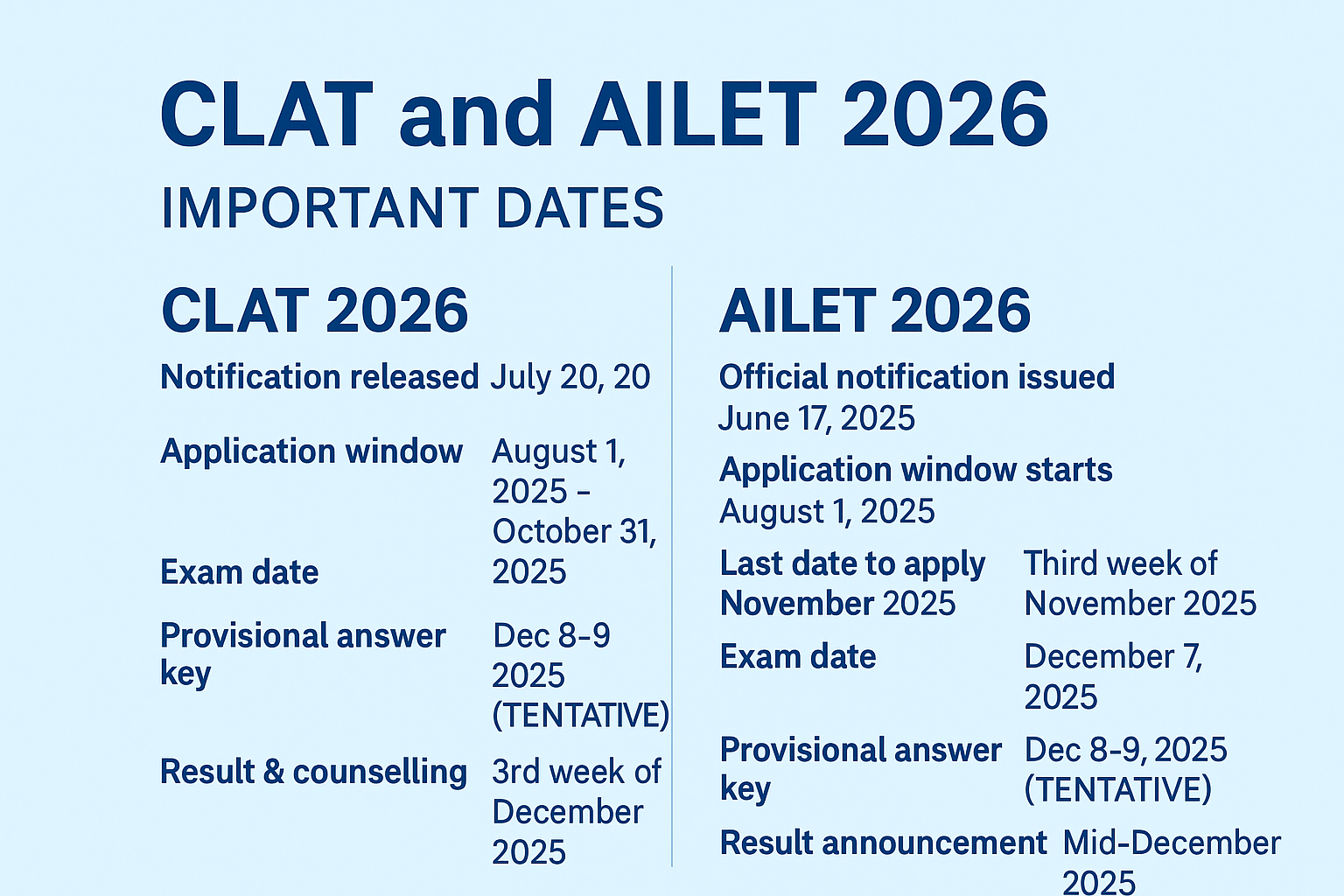
CLAT 2026 (Common Law Admission Test)

  • Notification released: July 20, 2025
  • Application window: August 1, 2025 – October 31, 2025
  • Exam date: Sunday, December 7, 2025 (2 PM–4 PM, offline/Pen and Paper)
  • Answer key release (TENTATIVE): Provisional answer key around Dec 8–9, objections till Dec 11, and final key by 3rd week of December
  • Result & counselling: Result expected in 3rd week of December; counselling registration late December

________________________________________

AILET 2026 (All India Law Entrance Test – NLU Delhi)

  • Official notification issued: July 22, 2025
  • Application window starts: August 7, 2025
  • Last date to apply: 10 November 2025
  • Admit card release: Last week of November 2025
  • Exam date: Sunday, December 14, 2025 (2 PM–4 PM, offline)
  • Provisional answer key: Likely released on Dec 8–9 with objection window soon after
  • Result announcement: Expected within 1 week after exam (mid‑December) Counselling: Likely late December/early January

📅 Quick Comparison Table

Event CLAT 2026 AILET 2026
Notification July 20, 2025 July 22, 2025
Application start August 1, 2025 August 7, 2025
Application deadline October 31, 2025 10 Nov 2025
Admit card available (Typically late Nov) Last week of November 2025
Exam December 7, 2025, 2 PM–4 PM December 14, 2025, 2 PM–4 PM
Provisional answer key Dec 8–9 (TBA) Dec 8–9 (TBA)
Result By 3rd week December 2025 (TBA) ~1 week after exam, mid‑December (TBA)
Counselling registration Late December 2025 Late December/Early January 2026 (TBA)


✅ What You Should Do

  1. Decide which exam aligns better with your law school goals.
  2. Keep the CLAT form open from August 1 to Oct 31.
  3. Complete AILET application by 10 November.
  4. Download admit cards late November.
  5. Decide on your preferred exam if both applications are filed.

Let me know if you’d like help comparing eligibility, exam patterns, or preparation strategies! click here

AILET 2026: Exam Date, Application Process, Syllabus, and Preparation Strategies

AILET 2026: Exam Date, Application, Syllabus & Prep Strategies

The All India Law Entrance Test (AILET), conducted by National Law University (NLU), Delhi, is one of India’s most prestigious law entrance exams. If you want to kickstart your career in law, AILET 2026 is your gateway to one of the top law schools in the country. Let’s look at all the key details you need to know:

🗓️ Important Dates for AILET 2026

  • Application Starts: August 2025 (tentative)
  • Last Date to Apply: November 2025
  • Admit Card Release: December 2025
  • Exam Date: 7th December 2025 (1st Sunday, usually)
  • Result Declaration: January 2026

Keep an eye on NLU Delhi’s official website for updates!

✍️ Application Process

  1. Visit the official NLU Delhi website: nludelhi.ac.in
  2. Register with your basic details.
  3. Fill in the application form carefully with accurate information.
  4. Upload scanned copies of your photograph, signature, and required certificates.
  5. Pay the application fee (INR 3,500 for General Category; relaxations for SC/ST/PwD candidates).
  6. Submit and save a copy of your application for future reference.

🧠 AILET 2026 Exam Pattern

  • Mode: Offline (pen-and-paper based)
  • Duration: 90 minutes
  • Sections: English Language, Current Affairs & General Knowledge, Logical Reasoning
  • Total Marks: 150
  • Negative Marking: 0.25 per wrong answer

📖 Syllabus Overview

  • English Language: Comprehension, Grammar, Vocabulary
  • Current Affairs & GK: National & International events, Sports, Awards, History, Geography, Polity
  • Logical Reasoning: Critical reasoning, puzzles, analytical thinking, syllogisms

🎯 Preparation Strategies for AILET 2026

  • Study Schedule: Allocate daily time slots for each section and stick to them.
  • Mock Tests: Practice AILET mock tests regularly to improve accuracy and time management.
  • Read Daily: Develop a habit of reading newspapers and legal updates for strong GK.
  • Work on Weaknesses: Give extra attention to the sections you struggle with most.
  • Review Past Papers: Analyze previous years’ questions to understand trends and expectations.

📚 Recommended Resources

  • Books: CP Fundamental Black books Section wise and Purple Work Book For Practice.
  • Newspapers/Magazines: The Hindu, Indian Express, CP GK Monthly Magazine
  • Test Series: Enroll in a  CP reputed test series for hands-on practice

💡 Conclusion

AILET 2026 is your chance to gain admission to one of India’s top law schools. With a well-structured study plan, consistent practice, and thorough revision, you can ace this exam. Start early, stay dedicated, and make your law school dream a reality.

🎯 CLAT 2025: How to Fill the Perfect NLU Preference List (with Seat Matrix)

🎯 CLAT 2025: How to Fill the Perfect NLU Preference List (with Seat Matrix)

Choosing the right National Law University (NLU) is not just about rank, it’s about the right fit for your goals, budget, background, and career plan. Here’s your one-stop guide to building a perfect, practical, and personalized NLU preference list for CLAT 2025.

cp_free_material


✅ Step 1: Know the Rules of the Game

Before we jump into rankings, remember:

  • You get only one shot to submit your preference list during CLAT counselling.
  • You can’t reshuffle preferences later.
  • The order you submit determines which college you’ll be allotted (if eligible).

Your top preferences should be aspirational but realistic.


🏆 The Ultimate NLU Ranking Guide (CLAT 2025 Edition)

So you’re staring at the list of 26 National Law Universities, wondering:
“Which one should I aim for?”
“What’s the actual ranking?”

Let’s clear the fog.

Here’s a realistic, reputation-based ranking of NLUs not just based on perception, but a mix of:

✅ Academic culture
✅ Placements & alumni network
✅ Peer group quality
✅ Internship exposure
✅ Mooting, debates, research

cp_free_material

🎓 TIER 1 – The Dream League

These are the IITs of Law. Top law firms and even international recruiters look here first.

Preference Rank

Law School

Short Form

1

National Law School of India University, Bangalore

NLSIU

2

National Law University, Delhi*

NLU Delhi

3

NALSAR University of Law, Hyderabad

NALSAR

4

WB National University of Juridical Sciences, Kolkata

WBNUJS

🔒 Note: NLU Delhi doesn’t participate in CLAT admission is through AILET.

cp_free_material


🧠 UPPER TIER 2 – The Power Players

Preference Rank

Law School

Short Form

5

National Law University, Jodhpur

NLUJ

6

National Law Institute University, Bhopal

NLIU

7

Gujarat National Law University, Gandhinagar

GNLU

8

Dr. Ram Manohar Lohiya National Law University, Lucknow

RMLNLU

9

Maharashtra National Law University, Mumbai

MNLUM

10

Hidayatullah National Law University, Raipur

HNLU

11

National Law University Odisha, Cuttack

NLUO

12

Rajiv Gandhi National University of Law, Patiala

RGNUL

13

National University of Advanced Legal Studies, Kochi

NUALS

14

Damodaram Sanjivayya National Law University, Vizag

DSNLU


🛠️ LOWER TIER 2 – The Underdogs with Potential

Preference Rank

Law School

Short Form

15

Maharashtra National Law University, Nagpur

MNLUN

16

National University of Study & Research in Law, Ranchi

NUSRL

17

Chanakya National Law University, Patna

CNLU

18

Tamil Nadu National Law University, Tiruchirapalli

TNNLS

19

Dharmashastra National Law University, Jabalpur

DNLU

20

National Law University & Judicial Academy, Assam

NLUJA


🧱 TIER 3 – The Newcomers (Approach with Research)

Preference Rank

Law School

Short Form

21

Dr. B.R. Ambedkar National Law University, Sonipat

DBRANLU

22

Maharashtra National Law University, Aurangabad

MNLUA

23

Himachal Pradesh National Law University, Shimla

HPNLU

24

Gujarat National Law University, Silvassa

GNLU-S

25

National Law University, Tripura (Agartala)

NLU Agartala

26

Dr. Rajendra Prasad National Law University, Prayagraj

RPNLU Prayagraj

⚠️ These are new and evolving ideal if you’re self-driven or have strong location/budget constraints.

cp_free_material


📊 CLAT 2025 NLU-Wise Seat Distribution (General, EWS, OBC, SC, ST)

Before you finalize your preference list, it’s important to know how many seats are actually available in each NLU for your category.

Here’s the CLAT 2024 seat matrix (expected to be similar for 2025):

S.No

NLU Name

Gen

EWS

OBC

SC

ST

1

NLSIU Bengaluru

121

30

81

45

23

2

NALSAR Hyderabad

66

13

26

19

8

3

NLIU Bhopal (BA LLB)

52

12

14

16

20

4

NLIU Bhopal (BSc LLB)

26

6

7

8

10

5

WBNUJS Kolkata (BA LLB)

73

7

20

8

6

WBNUJS Kolkata (BSc LLB)

32

3

11

4

7

NLU Jodhpur

62

25

18

9

8

HNLU Raipur

91

23

23

33

9

GNLU Gandhinagar

79

16

42

23

12

10

RMLNLU Lucknow

80

9

43

34

3

11

RGNUL Patiala

134

27

14

12

NUALS Kochi

36

18

5

1

13

NLUO Cuttack (BA LLB)

85

8

13

14

NLUO Cuttack (BBA LLB)

43

4

6

15

NUSRL Ranchi

60

19

15

21

16

NLUJA Assam

31

16

4

9

17

DSNLU Vizag

55

12

13

16

7

18

TNNLU (BA LLB)

17

14

11

1

19

TNNLU (BCom LLB)

17

14

10

1

20

MNLU Mumbai

37

10

19

13

7

21

MNLU Nagpur (BA LLB)

46

12

23

16

8

22

MNLU Nagpur (BBA LLB)

23

6

11

8

4

23

MNLU Aurangabad (BA LLB)

23

6

11

8

4

24

MNLU Aurangabad (BBA LLB)

23

6

11

8

4

25

HPNLU Shimla (BA LLB)

46

9

5

26

HPNLU Shimla (BBA LLB)

46

9

5

27

DBRANLU Haryana

47

12

30

15

7

28

NLU Tripura

28

16

9

29

GNLU Silvassa

31

6

16

9

4

🔍 Some NLUs offer multiple programs (BA, BBA, BSc). Make sure to prefer the one that aligns with your strengths.

cp_free_material


🧩 Final Thoughts on Preference List Strategy

  • Start with ambition (Tier 1)
  • Then move to backup with credibility (Upper Tier 2)
  • Round off with safe options (Lower Tier 2 & Tier 3)
  • Always consider seat availability, category reservation, and campus quality

📣 Need Help?

If you’re still unsure, confused between two NLUs, or want a personalized preference list based on your rank and background, drop your query or join my Telegram community. I personally respond to all CLAT 2025 aspirants there.

Your NLU journey begins here. Make every choice count.

Understanding the CUET PG – Paper Pattern for Different Universities in 2025

Getting a grip on the CUET PG exam’s paper pattern can feel like a maze. Different universities have their own twists, making it a bit of a puzzle for students. This guide breaks it all down, showing what to expect in 2025. From the core structure to the little differences, we’ve got it covered. Whether you’re aiming for a specific university or just curious, understanding these patterns is key. Let’s dive into the details and see what makes each university tick when it comes to the CUET PG.

Key Takeaways

  • The CUET PG exam pattern varies across universities, impacting preparation strategies.
  • Understanding the core structure of the exam is crucial for all aspiring candidates.
  • University-specific variations can influence the focus areas for students.
  • The exam includes both core and elective subjects, each with different weightage.
  • Technological integration in the exam process is an emerging trend to watch.

Overview of CUET PG Paper Pattern

Study materials for CUET PG preparation on a desk.

Understanding the Structure

The CUET PG exam is like a big puzzle, and understanding its structure is key to solving it. The test usually includes multiple sections, each focusing on different skills and knowledge areas. Typically, there are sections on language skills, domain knowledge, and general aptitude. Each section is designed to assess specific abilities, making it important for students to know what to expect.

Key Components of the Exam

The exam is made up of several key components. First, there’s the language section, which tests comprehension and communication skills. Then, there’s the domain-specific section, which varies depending on the subject chosen by the student. Lastly, the general aptitude section evaluates logical reasoning and analytical skills. These components are crucial as they help universities gauge a candidate’s readiness for advanced studies.

Importance of the Paper Pattern

Understanding the paper pattern is like having a map before a journey. It helps students plan their study schedule and focus on areas that need improvement. Knowing the pattern also reduces anxiety, as students can practice with mock tests and get familiar with the exam format. This familiarity often leads to better performance on the actual test day.

"Getting to know the CUET PG paper pattern is not just about passing the exam; it’s about preparing for the challenges of postgraduate education."

By understanding the structure, key components, and importance of the CUET PG paper pattern, students can approach their preparation with confidence and clarity. This preparation is essential for achieving success in the exam and gaining admission to their desired university programs.

Differences in CUET PG Paper Pattern Across Universities

University-Specific Variations

When it comes to the Common University Entrance Test for Postgraduates (CUET PG), each university seems to have its own twist. Some universities prefer a more traditional approach with pen-and-paper tests, while others have moved entirely online. The subjects tested can also vary, with some institutions offering a broad range of electives, and others sticking strictly to core subjects. These variations can make the CUET PG feel like a whole different ball game depending on where you’re applying.

Impact on Students

The differences in paper patterns can really shake things up for students. Imagine preparing for an exam thinking it’s all about multiple-choice questions, only to find out that some universities require essay-type answers. This unpredictability can add a layer of stress, making it crucial for students to thoroughly research the specific requirements of each university they are interested in.

  • Some universities might focus more on technical subjects.
  • Others could emphasize analytical and reasoning skills.
  • A few might even include a general knowledge section.

Reasons for Differences

Why are there such differences in the CUET PG paper pattern across universities? Well, it boils down to the unique educational philosophies and objectives of each institution. Some universities aim to test a student’s in-depth knowledge in specific areas, while others are more interested in assessing overall aptitude and problem-solving skills.

The diversity in exam patterns reflects the varied academic priorities and teaching methodologies across universities, aiming to select candidates who best fit their educational ethos.

In conclusion, understanding these differences is key for prospective students. It’s not just about passing an exam; it’s about finding the right fit for your educational journey. CUET 2025 is a significant step for many, and knowing these nuances can make all the difference.

Subject-Wise Breakdown of CUET PG Exam

Core Subjects Included

The CUET PG exam tests students on a variety of core subjects, each vital for a well-rounded understanding of their chosen field. Typically, these core subjects are aligned with the specific program a student is applying for. For instance, a student applying for a Master’s in Economics might encounter questions on microeconomics, macroeconomics, and econometrics. Similarly, those inclined towards a science stream might face subjects like Physics, Chemistry, or Biology. The key is to ensure that these core subjects reflect the foundational knowledge required for postgraduate studies.

Elective Options Available

In addition to core subjects, the CUET PG exam also offers elective options. These electives allow students to showcase their knowledge in specialized areas that might not be covered under the core subjects. This flexibility is particularly beneficial for students who have a keen interest or additional expertise in certain topics. For example, a student might choose to answer questions on environmental policy or digital marketing, depending on their background and future aspirations.

Weightage of Each Subject

Understanding the weightage of subjects in the CUET PG exam is crucial for effective preparation. Generally, core subjects carry more weight compared to electives, reflecting their importance in the curriculum. However, this can vary depending on the university and the specific program. The CUET PG 2025 exam pattern has been revised to consist of 75 questions per paper, with subject-wise weightage, making it essential for candidates to prioritize their study focus accordingly. This structured approach ensures that students are not only well-prepared but also strategic in their exam preparations.

Pro Tip: Balancing your study time between core subjects and electives can significantly enhance your performance. Focus on subjects with higher weightage but don’t neglect electives, as they can be the differentiator in competitive scenarios.

Preparation Strategies for CUET PG Exam

Effective Study Plans

Crafting a well-thought-out study plan is the backbone of successful exam preparation. Start by breaking down the syllabus into manageable sections. Dedicate specific days to different subjects, ensuring you cover both core and elective topics. Consistency is key, so try to stick to your schedule as much as possible. Be sure to include time for revision and self-assessment through mock tests to gauge your understanding and progress.

Time Management Tips

Time management can make or break your preparation. Begin by setting clear priorities for each study session. Allocate more time to subjects or topics you find challenging. Use techniques like the Pomodoro Technique—25 minutes of focused study followed by a 5-minute break—to maintain concentration. Remember, quality over quantity; it’s better to have a few hours of focused study than a whole day of distracted learning.

Resources for Preparation

Gathering the right resources is crucial. Use a mix of textbooks, online courses, and practice papers to cover all bases. Many websites offer free mock tests and sample questions that can simulate the exam environment. Don’t forget to review past exam papers to understand the question patterns and difficulty level. Joining study groups can also be beneficial for exchanging notes and discussing difficult concepts.

"Preparation is not about doing everything; it’s about doing the right things effectively. Focus on understanding concepts rather than rote learning."

By following these strategies, you can enhance your preparation and boost your confidence as the exam day approaches. Stay committed and keep your end goal in sight.

Role of CUET PG in University Admissions

Admission Criteria

The CUET PG exam plays a critical role in the admission process for postgraduate courses across various universities. Universities use the scores from this test to evaluate candidates’ suitability for different programs. Typically, the admission criteria include a combination of CUET PG scores, undergraduate grades, and sometimes an interview or group discussion.

Influence on Selection Process

The influence of CUET PG scores on the selection process can vary significantly between institutions. Some universities might give more weight to the CUET PG scores, while others might consider it as just one part of a broader assessment. This standardized test helps in creating a level playing field for students from diverse educational backgrounds, ensuring that everyone gets a fair shot based on their merit.

Comparison with Other Exams

When you compare CUET PG with other entrance exams like GATE or CLAT, a few differences stand out. While GATE is more specialized, focusing on engineering and technology fields, CUET PG covers a wider range of disciplines. On the other hand, CLAT is specifically for law admissions, making CUET PG more versatile for students aiming for different postgraduate paths. Each exam has its own set of challenges and advantages, depending on the student’s academic and career goals.

The CUET PG exam is not just a test; it’s a gateway to opportunities, shaping the academic journeys of countless students. Its role in university admissions underscores the importance of a fair and standardized evaluation system, paving the way for a diverse and inclusive educational environment.

Challenges Faced by Students in CUET PG

Common Difficulties

Preparing for the CUET PG exam can be quite a ride for students. One of the biggest issues is the sheer volume of material to study. With so many subjects to cover, it’s easy to feel overwhelmed. Students often struggle to keep track of what they’ve studied and what still needs attention. Another biggie is the pressure to perform well. Everyone wants to get into a good university, and the competition is fierce. This pressure can make even the most confident students second-guess themselves. Plus, there’s the issue of time management. Balancing study time with other responsibilities is no walk in the park.

Overcoming Exam Stress

Stress is a constant companion for many test-takers. But there are ways to tackle it head-on. Taking regular breaks during study sessions can help keep stress levels in check. It’s also important to maintain a healthy lifestyle—eating well and getting enough sleep can make a world of difference. Some students find that meditation or yoga helps them stay calm and focused. It’s all about finding what works for you and sticking to it.

Support Systems Available

Luckily, students aren’t alone in this journey. Many universities offer counseling services to help students manage stress and anxiety. There are also study groups where students can share tips and support each other. Online resources, like online courses, can provide additional help by offering flexible learning options. These courses let students study at their own pace, which can relieve some of the pressure. It’s all about using the resources available to make the process a bit easier.

Technological Integration in CUET PG Exam

Student studying with laptop in a modern study space.

Online vs Offline Modes

In recent years, the CUET PG exam has seen a shift towards online modes, offering candidates the flexibility to take the test from various locations. This digital transition aims to make the process more efficient and accessible. However, some institutions still provide offline options, primarily to accommodate areas with limited internet access. Balancing these modes ensures that all students have equal opportunities.

Use of Digital Tools

The incorporation of digital tools in the CUET PG exam is reshaping how candidates prepare and participate. From online mock tests to digital study materials, these resources are designed to enhance the learning experience. Many candidates utilize platforms that offer interactive content and practice exams, which help in understanding the exam pattern better. Here’s a quick list of digital tools commonly used:

  • Online mock test platforms
  • Digital study guides
  • Interactive learning apps

Future Trends in Exam Conduct

Looking ahead, the CUET PG exam is likely to embrace more advanced technologies. Potential changes include AI-driven proctoring to ensure exam integrity and the use of blockchain for secure result management. These innovations could streamline the examination process, making it more robust and transparent.

"Adapting to technological changes in exams is no longer optional but a necessity for keeping up with educational advancements."

The push towards digitalization is not just about convenience but also about preparing students for a tech-driven world. As the CUET PG evolves, it’s crucial to keep an eye on these trends to stay ahead in the academic landscape.

Feedback from Students and Educators on CUET PG

Student Experiences

The CUET PG exam has become a significant milestone for many students aiming for higher education. A lot of students feel the pressure, not just from the exam itself but from the expectations surrounding it. Many share that while the exam is challenging, it also pushes them to develop better study habits.

  • Some students appreciate the diverse subjects covered, which broadens their knowledge base.
  • Others find the time constraints difficult, making time management a critical skill.
  • Preparing through mock tests is often cited as a key strategy for success.

Educator Insights

Educators have mixed feelings about the CUET PG. While they acknowledge its role in standardizing university admissions, they also point out areas for improvement. Many educators believe the exam could better assess a student’s critical thinking and problem-solving skills.

  • They suggest more emphasis on scenario-based questions to test real-world application.
  • There’s a call for more resources to help students prepare effectively.
  • Some educators recommend regular updates to the syllabus to keep it relevant.

Suggestions for Improvement

Both students and educators have voiced several suggestions to enhance the CUET PG experience:

  1. Incorporate more practical questions that reflect real-world scenarios.
  2. Increase the availability of preparatory resources, including online courses and workshops.
  3. Regularly update the exam pattern to align with current educational trends.

"The CUET PG is more than just an exam; it’s a journey that shapes a student’s academic future. With the right tweaks, it can become a more effective tool for assessing true potential."

Future Prospects of CUET PG Exam

Potential Changes in Pattern

Looking ahead, the CUET PG exam might see some shifts in its structure. There’s talk about making the exam more aligned with industry needs, possibly introducing sections that assess practical skills over theoretical knowledge. This could mean changes in question types, with a focus on problem-solving and real-world applications. Such updates aim to better prepare students for their future careers.

Long-Term Impact on Education

The CUET PG exam’s evolution could significantly shape higher education. By emphasizing skill-based assessments, it encourages universities to adapt their curricula, fostering a more holistic learning environment. This shift might lead to graduates who are not only knowledgeable but also equipped with the skills needed in today’s job market.

Predictions for Upcoming Years

In the coming years, we might see the CUET PG becoming a benchmark for postgraduate admissions across more universities. As the exam gains traction, it could influence other entrance tests, encouraging a broader adoption of similar assessment styles. This trend reflects a growing acknowledgment of the importance of practical skills in education.

The future of CUET PG is not just about testing knowledge but about shaping the educational landscape to meet the demands of a rapidly changing world. Students and educators alike are hopeful for a system that values both intellect and skill.

Comparative Analysis of CUET PG and Other Entrance Exams

When comparing the CUET PG with the Common Law Admission Test (CLAT), the differences are quite stark. CLAT is primarily focused on legal education, aiming to assess skills in legal reasoning, logical reasoning, and comprehension. In contrast, CUET PG caters to a broader range of subjects, assessing a wider academic spectrum. This makes CUET PG more versatile for students aiming for diverse postgraduate programs. CLAT’s structure is more rigid with its focus on law, whereas CUET PG offers flexibility in terms of subject choices.

CUET PG vs GATE

The Graduate Aptitude Test in Engineering (GATE) is another major exam that often gets compared with CUET PG. While GATE is specialized for engineering and technology fields, CUET PG covers a broader range of disciplines. GATE is highly technical, requiring in-depth knowledge of specific engineering subjects, while CUET PG’s scope includes humanities, sciences, and more. This distinction highlights CUET PG’s unique position in serving a wider academic audience.

Unique Features of CUET PG

One of the standout aspects of CUET PG is its adaptability. Unlike some other entrance exams, CUET PG allows candidates to choose from a variety of subjects, making it less restrictive. The exam’s structure is designed to accommodate different academic backgrounds, providing an inclusive platform for students from various fields. Additionally, the integration of digital tools in CUET PG offers a modern approach, setting it apart from traditional exams. This flexibility and modernity are key reasons why CUET PG is gaining popularity among students.

Insights from Previous CUET PG Exams

Reflecting on the past CUET PG exams, a few trends stand out. First, the exam has consistently evolved to include more diverse question formats. Initially, the focus was heavily on multiple-choice questions. However, recent years have seen a shift towards incorporating analytical and essay-type questions. This change aims to assess candidates’ critical thinking and comprehensive understanding of subjects.

Another noticeable trend is the increasing emphasis on interdisciplinary topics. As universities strive to produce well-rounded graduates, the CUET PG exam has mirrored this by integrating questions that require knowledge across various fields. This approach not only challenges students but also prepares them for the multifaceted nature of modern careers.

From previous CUET PG exams, students have learned the importance of adaptability. The exam’s evolving pattern means that sticking to traditional study methods can be limiting. Instead, students have found success by diversifying their preparation strategies. This includes using a mix of textbooks, online resources, and previous year papers to get a comprehensive grasp of potential exam questions.

Moreover, time management has emerged as a crucial skill. The varied question formats and interdisciplinary focus require students to allocate their time efficiently during the exam. Practicing under timed conditions has proven beneficial for many.

Over the years, numerous students have excelled in the CUET PG exams, each with their unique story. Some attribute their success to structured study schedules, while others highlight the role of mock tests in their preparation. One common thread among these success stories is the emphasis on consistency and resilience.

A few students have shared how they overcame initial setbacks by adjusting their study techniques and seeking help from peers and mentors. These stories serve as motivation for future candidates, illustrating that persistence and a willingness to adapt are key to conquering the CUET PG exam.

"The CUET PG exam is not just a test of knowledge, but a testament to one’s ability to adapt and persevere. Each challenge it presents is an opportunity to grow, both academically and personally."

Looking back at past CUET PG exams can give you valuable insights into what to expect. By understanding the trends and patterns, you can better prepare yourself for success. Don’t miss out on the chance to enhance your preparation! Visit our website for more tips and resources to help you excel in your exams!

Wrapping It Up

So, there you have it. The CUET PG exam pattern for 2025 is shaping up to be quite the mixed bag across different universities. Each one seems to have its own twist, which means students need to be on their toes. It’s not just about hitting the books; it’s about knowing what each university is looking for. And hey, while you’re at it, don’t forget to check out CLAT Possible for some handy tips and tricks. They might just give you the edge you need. Good luck, and may the odds be ever in your favor!

Frequently Asked Questions

What is the CUET PG exam?

The CUET PG is a test for students who want to join postgraduate courses at different universities.

How is the CUET PG paper structured?

The CUET PG paper usually includes multiple-choice questions covering various subjects depending on the course.

Are there differences in the CUET PG paper pattern between universities?

Yes, some universities might have slight changes in the paper pattern to fit their specific requirements.

What subjects are covered in the CUET PG exam?

The exam covers core subjects related to the course, along with some elective options.

How important is the CUET PG exam for university admissions?

The CUET PG is quite important as it plays a big role in the selection process for many universities.

What are some common challenges students face with the CUET PG?

Students often find managing time and dealing with exam stress to be challenging.

How can students prepare effectively for the CUET PG?

Students should create a study plan, manage their time wisely, and use available resources like books and online materials.

What role does technology play in the CUET PG exam?

Technology helps in conducting the exam online, making it more accessible to students.

Unlocking Success: The Ultimate Guide to Best CLAT Preparation 2026

Getting ready for the CLAT 2026 exam can be a bit overwhelming, but don’t worry, you’re not alone. This guide is here to help you navigate through the preparation process with ease. Whether you’re aiming for an undergraduate or a postgraduate program, understanding the exam structure, setting up a study plan, and choosing the right materials are essential steps. Let’s dive into the key takeaways that will set you on the path to success.

Key Takeaways

  • Understand the CLAT exam format and keep an eye on any changes for 2026.
  • Craft a study plan that balances all subjects and includes regular breaks.
  • Focus on improving English comprehension and vocabulary skills.
  • Stay updated with current events and historical facts for the GK section.
  • Practice legal reasoning and logical reasoning with past papers.

Understanding the CLAT Exam Structure

Key Sections and Their Weightage

The CLAT 2026 exam is structured to evaluate a range of skills across five distinct sections. Each section carries a specific weightage, contributing to a total of 120 questions. The sections include:

  • English Language: Tests comprehension and language skills.
  • Current Affairs, including General Knowledge: Assesses awareness of recent events and historical knowledge.
  • Legal Reasoning: Focuses on understanding and applying legal principles.
  • Logical Reasoning: Evaluates the ability to critically analyze arguments.
  • Quantitative Techniques: Involves mathematical problem-solving.

Here’s a quick look at the weightage for each section:

Subject Number of Questions
English Language 22-26
Current Affairs, including General Knowledge 28-32
Legal Reasoning 28-32
Logical Reasoning 22-26
Quantitative Techniques 10-14

This CLAT 2026 exam structure is designed to assess candidates’ comprehension, analytical skills, and legal aptitude.

Marking Scheme and Time Management

The marking scheme for CLAT is straightforward yet demands precision. For every correct answer, you earn one mark, while each incorrect response results in a deduction of 0.25 marks. This negative marking system means that guessing can be risky if you’re unsure about an answer.

Time management is crucial in this two-hour exam. With 120 questions to tackle, you have about one minute per question. Prioritizing sections based on your strengths can help maximize your score. Consider the following tips:

  1. Start with your strongest section to build confidence.
  2. Keep track of time to ensure you don’t spend too long on any one section.
  3. Leave difficult questions for review if time permits.

Changes in the 2026 Exam Format

The CLAT 2026 has introduced a few changes to its format, aiming to better assess the candidates’ abilities. The exam will continue to be a pen-and-paper test, but you might notice a shift in the type of questions. For instance, there may be more paragraph-based questions, especially in the English Language and Legal Reasoning sections.

"Adapting to the new format can be challenging, but understanding these changes is key to a successful preparation strategy."

Staying updated with these changes is essential, as it allows you to tailor your preparation accordingly and avoid any surprises on the exam day. Make sure to practice with the latest sample papers and mock tests to get a feel for the new structure.

Eligibility Criteria for CLAT 2026

Undergraduate Program Requirements

To apply for the undergraduate CLAT exam, candidates need to have completed their Senior Secondary School (10+2) or an equivalent exam. The minimum aggregate marks required are 45% for general candidates and 40% for those from reserved categories like SC and ST. The good news? There’s no upper age limit for taking the exam, so anyone who’s completed their schooling can give it a shot.

Postgraduate Program Requirements

For those eyeing the postgraduate CLAT, the requirement is a bachelor’s degree in law. This could be an LL.B or an equivalent degree from a recognized university. Here, the minimum marks are set at 50% for general candidates and 45% for SC and ST candidates. Even if you’ve had to reappear for exams, you’re still eligible, as long as you meet the marks criteria by the time of admission.

Special Provisions for Reserved Categories

The CLAT eligibility criteria also include special provisions for reserved categories. This means that candidates from SC, ST, and other reserved categories have a relaxation in the minimum marks required for both undergraduate and postgraduate programs. Additionally, some seats are reserved for these categories in many participating universities, ensuring broader access to legal education.

"CLAT eligibility criteria encompass minimum educational qualifications, required passing marks, and any applicable age limits." Learn more

This inclusive approach aims to provide equal opportunities and ensure diversity within the legal education sphere.

Crafting a Personalized Study Plan

Student studying for CLAT with books and notes.

Setting Realistic Goals and Milestones

Creating a study plan for CLAT 2026 is like mapping out a road trip. You need clear, realistic goals to ensure you reach your destination without running out of gas. Setting achievable milestones is key. Start by identifying what areas you need to focus on. Maybe English comprehension is your weak spot, or perhaps legal reasoning needs more attention. Break down these areas into smaller tasks, like reading a certain number of pages or solving specific types of problems each day.

Here’s a simple way to structure your study plan:

  • Daily Tasks: Dedicate specific hours to different subjects. For example, spend two hours on English and another two on legal reasoning.
  • Weekly Goals: Aim to complete a set number of chapters or practice papers by the end of the week.
  • Monthly Milestones: Assess your progress at the end of each month. Are you on track with your study goals?

Balancing Different Subjects Effectively

Balancing subjects is like juggling; you don’t want to drop any balls. Allocate time based on the weightage and difficulty of each section. For instance, if you struggle with quantitative techniques, give it more time. But don’t neglect other areas. A balanced approach ensures you’re well-prepared across the board.

  • Morning Sessions: Focus on subjects that require more mental energy, like legal reasoning or quantitative techniques.
  • Afternoon Sessions: Dedicate this time to lighter subjects, such as current affairs or general knowledge.
  • Evening Wrap-Up: Review what you’ve learned throughout the day and prepare for tomorrow’s tasks.

Incorporating Breaks and Leisure Time

It’s not all about studying; breaks are essential. They prevent burnout and keep you fresh. Schedule short breaks after every study session. Maybe a 10-minute walk or a quick chat with a friend.

Consider these tips for effective breaks:

  • Short Breaks: Take a 5-10 minute break every hour to recharge.
  • Long Breaks: After a few hours of study, take a longer break, like a walk or a hobby you enjoy.
  • Leisure Time: Dedicate time to activities you love, whether it’s reading a novel or playing a sport.

Balancing study with breaks isn’t just about resting; it’s about optimizing your brain for better learning. When you return to your books, you’ll be more focused and efficient.

For a detailed study plan that outlines yearly and monthly schedules for each section, check out this comprehensive guide. If you’re looking to tailor your study approach, a personalized plan can help you focus on areas needing improvement and maintain motivation with daily tasks.

Mastering the English Language Section

Student studying English for CLAT exam preparation.

Improving Comprehension Skills

To get a handle on the English section of the CLAT, you need to work on reading passages quickly and understanding them well. Aim to read a passage of about 450 words in under 5-7 minutes. This will help you absorb information better and faster. Here are some tips:

  • Preview the passage: Before diving in, scan for headings, subheadings, or any italicized words to get a sense of what it’s about.
  • Break down complex sentences: Split them into smaller parts to understand each bit before piecing them together.
  • Annotate while reading: Jot down key points or arguments as you go to keep track of important information.

Reading effectively isn’t just about speed; it’s about engaging with the text and picking up on the writer’s intent.

Expanding Vocabulary and Usage

Building a strong vocabulary is crucial. It’s not just about knowing many words, but understanding their usage in different contexts. Here’s how you can do it:

  1. Read regularly: Books, articles, and essays expose you to new words.
  2. Use a dictionary: When you come across unfamiliar words, look them up.
  3. Practice writing: Use new words in sentences to get comfortable with them.

Practicing with Sample Passages

Practice is key. Regularly working on sample passages can help you get used to the type of questions you might face. Here’s a simple approach:

  • Set a timer: Mimic exam conditions by timing yourself.
  • Review your answers: Check what you got wrong and why.
  • Focus on improvement: Use each practice session to get a bit better.

By consistently working on these areas, you’ll be well-prepared to tackle the English Language section of the CLAT with confidence.

Excelling in Current Affairs and General Knowledge

Staying Updated with Daily News

To ace the current affairs section, it’s crucial to stay in the loop with what’s happening around the world. Make it a habit to read newspapers daily. Opt for reputed sources like The Hindu or The Indian Express, which offer in-depth analysis of events. Besides newspapers, weekly magazines like India Today can provide a comprehensive overview of significant events. You might find it helpful to maintain a journal where you jot down key points from your readings. This not only helps in retention but also serves as a quick revision tool.

Focusing on Historical Events

Understanding historical events is not just about memorizing dates and facts. It’s about grasping the cause and effect of these events. For instance, knowing the impact of the French Revolution on modern democracies can provide insights into current political systems. Try to connect the dots between past and present scenarios. This approach aids in better retention and understanding of the subject matter. Use timelines to map out major historical events, which can be a fun and effective way to study.

Utilizing Online Resources and Quizzes

The internet is a treasure trove of resources for CLAT exam preparation. Websites and apps offer quizzes that can test your knowledge and help you identify weak areas. Platforms like GradeUp and Testbook provide mock tests tailored for CLAT aspirants. Engaging in online forums can also be beneficial. Discussing topics with peers can offer new perspectives and insights. Additionally, podcasts and YouTube channels dedicated to current affairs can be a great way to learn on the go. Remember, consistency is key. Regular practice and revision can significantly boost your confidence and performance in the exam.

Developing Legal Reasoning Abilities

Understanding Legal Principles

Getting a grip on legal principles is like learning the rules of a new game. It’s about knowing the basics before you dive into the complexities. Start by familiarizing yourself with common legal terminologies. You don’t have to memorize them all, just get comfortable with the language. Understanding these terms will help you navigate through legal passages with ease.

Applying Logic to Legal Scenarios

Once you’re cozy with the principles, it’s time to apply them. Think of it like solving a puzzle where the pieces are the facts and the legal rules. First, read the scenario carefully, identifying the key issues. Then, match these issues with the relevant legal principles. This method will help you draw logical conclusions. Practice this with different scenarios to get better.

Practicing with Past Papers

There’s no better way to prepare than by practicing with past papers. This not only helps you understand the exam pattern but also boosts your confidence. Make it a habit to solve a few papers every week. While doing this, time yourself to improve speed and accuracy. Remember, consistency is key.

Legal reasoning isn’t just about knowing the laws; it’s about thinking like a lawyer. The more you practice, the sharper your skills become. Don’t rush the process. Take your time to understand and apply what you’ve learned.

For more essential tips on preparing for CLAT Legal Reasoning, including key questions and problem-solving strategies, check out our detailed guide. And remember, mastering legal reasoning is crucial for success in the Common Law Admission Test (CLAT). Regular practice and staying informed about current affairs will surely give you an edge.

Sharpening Logical Reasoning Skills

Logical reasoning is a key part of the CLAT exam. It tests your ability to think clearly and make sense of complex situations. Let’s break down how you can sharpen these skills effectively.

Identifying Patterns and Sequences

Understanding patterns and sequences is like piecing together a puzzle. You need to look for recurring themes or sequences that help solve problems. Here are some steps to get you started:

  1. Observe Carefully: Begin by carefully observing the elements involved. Are there any repeating numbers, letters, or shapes?
  2. Spot the Pattern: Try to identify the pattern. Is it increasing, decreasing, or alternating? Patterns can be tricky, so take your time.
  3. Apply the Pattern: Once you’ve identified it, apply the pattern to find the missing element or predict the next in the sequence.

Critical Thinking and Problem Solving

Critical thinking is all about questioning and analyzing information. To excel in logical reasoning, you must practice these skills regularly.

  • Question the Premises: Always question the premises of an argument. Are they sound and logical?
  • Evaluate Arguments: Look at arguments critically. Are the conclusions supported by the premises?
  • Consider Alternatives: Think of alternative solutions or perspectives that might change the outcome.

Time Management in Logical Sections

Time management is crucial during the exam. Without it, even the brightest minds can struggle.

  • Prioritize Questions: Start with questions you find easier and move on to the tougher ones.
  • Set a Timer: Practice with a timer to get used to the pressure of the exam.
  • Review: If time allows, review your answers to catch any mistakes.

Logical reasoning can be daunting, but with consistent practice and the right strategies, you can master it. Keep challenging yourself with various types of questions and remember, practice makes perfect.

For more effective study strategies, especially in sharpening logical reasoning skills, check out our guide.

Tackling Quantitative Techniques

Mastering Basic Mathematical Concepts

Alright, let’s jump into the basics. If you’re gearing up for CLAT Quantitative Techniques, the first step is to get cozy with core math concepts. Think ratios and proportions, algebra basics, and a bit of geometry. These topics form the backbone of the section. Understanding these fundamentals is crucial because they’ll help you tackle more complex problems later on. Start with practicing simple problems, then gradually increase the difficulty as you gain confidence.

Solving Complex Problems Efficiently

Once you’re comfortable with the basics, it’s time to level up. Tackling complex problems efficiently is the name of the game. Here’s a quick tip: break down complicated questions into smaller, manageable parts. This way, you can focus on solving each part before putting it all together. Also, practice using different methods to solve the same problem. This not only enhances your problem-solving skills but also prepares you for unexpected twists in exam questions.

Utilizing Shortcuts and Tricks

In preparing for CLAT Quantitative Techniques, speed is your best friend. Knowing shortcuts can save you precious time. For instance, mastering techniques like cross-multiplication for ratios or the BODMAS rule for algebra can be game-changers. Here’s a pro tip: create a cheat sheet of these tricks and review it regularly. This not only reinforces your memory but also boosts your confidence during the exam.

"The key to mastering quantitative techniques is consistent practice and a keen understanding of mathematical principles. With dedication and the right strategy, you can turn this challenging section into your strongest suit."

Remember, practice makes perfect. The more you work on these techniques, the more natural they’ll become. Good luck!

Effective Revision Strategies for CLAT 2026

Prioritizing Topics for Revision

When you’re gearing up for the CLAT 2025, it’s important to know where to focus your energy. Start by identifying the subjects you struggle with the most. Make a list of topics that need more attention and dive into those first. Focus on high-weightage sections, as they can significantly impact your score. Remember, smart revision is about optimizing your efforts to get the best results.

Utilizing Mock Tests and Sample Papers

Mock tests are your best friends during revision. They help you get familiar with the exam format and timing. Try to simulate the exam environment by timing yourself while solving these tests. After each test, review your answers and pinpoint areas where you can improve. This practice not only boosts your confidence but also enhances your time management skills.

Managing Stress and Anxiety

The days leading up to the exam can be nerve-wracking, but it’s crucial to keep stress in check. Incorporate relaxation techniques like deep breathing or meditation into your daily routine. Ensure you’re getting enough sleep and maintaining a balanced diet. Remember, a calm mind performs better.

"Revision isn’t just about cramming; it’s about reinforcing what you’ve learned and building confidence in your abilities."

Incorporating these strategies can make your revision phase more productive and less stressful, paving the way for success in the CLAT exam.

Choosing the Right Study Materials and Resources

Recommended Books and Authors

Picking the right books is like laying a solid foundation for your CLAT prep. Start with the basics. For English, "Word Power Made Easy" by Norman Lewis is a classic. It’s great for building vocabulary. For Current Affairs and General Knowledge, "Manorama Yearbook" is a good bet. It covers a wide range of topics you need to know. When it comes to Legal Reasoning, consider "Legal Aptitude for the CLAT and other Law Entrance Examinations" by A. P. Bhardwaj. It’s tailored specifically for law aspirants.

Online Courses and Tutorials

Online resources can be a game-changer. Platforms like CLAT Possible offer comprehensive courses covering all sections of the exam. These courses often include video tutorials, practice papers, and interactive sessions with experts. They’re perfect if you want a flexible study schedule. Plus, you can revisit difficult topics anytime. Just make sure to choose courses that align with the CLAT syllabus.

Joining Study Groups and Forums

Studying alone can be tough. That’s where study groups come in. Joining a group can provide motivation and support. You can share resources, discuss difficult topics, and even quiz each other. Online forums are also useful. They give you a platform to ask questions and get answers from peers and experts. Just remember, while study groups are helpful, they shouldn’t replace your individual study time.

Picking the right study materials is crucial for success in the CLAT exam. It’s not just about the quantity but the quality of resources you use. Make informed choices and stick to them.

Understanding the Role of Coaching Institutes

Benefits of Professional Guidance

When it comes to preparing for CLAT, coaching institutes can be game-changers. They offer structured learning environments, which can help keep you on track. Expert instructors guide you through complex topics, breaking them down into manageable chunks. Plus, you get access to a wealth of resources, like mock tests and study materials, that might be hard to find on your own.

Choosing the Right Coaching Center

Not all coaching centers are created equal. It’s crucial to find one that suits your learning style and needs. Consider factors like location, fees, and the success rate of past students. Some centers offer crash courses, which can be perfect if you’re short on time. Don’t forget to check reviews and talk to former students to get a feel for the place.

Balancing Self-Study and Coaching

While coaching institutes provide a solid foundation, self-study is where you truly internalize what you’ve learned. Create a study schedule that allows you to balance both. Use coaching sessions to clarify doubts and gain insights, then reinforce that knowledge through personal study. Remember, it’s about taking control of your learning journey.

Finding the right balance between coaching and self-study can significantly enhance your CLAT preparation, allowing you to cover all bases without feeling overwhelmed.

Final Preparations and Exam Day Tips

Organizing Essential Documents

Before you even think about heading to the exam center, make sure you’ve got all your important documents ready. Double-check your admit card, photo ID, and any other required papers. Put them in a folder or envelope to keep them safe. It’s a good idea to make a checklist, so you don’t forget anything crucial.

Planning Your Exam Day Schedule

Having a plan for exam day can really help keep stress at bay. Start with setting your alarm early enough to avoid rushing. Plan your route to the center and leave extra time for unexpected delays. Pack your bag the night before with essentials like a water bottle, some snacks, and maybe a sweater if it gets chilly.

Staying Calm and Focused

Staying calm is easier said than done, but it’s key to doing well. Try some deep breathing exercises or meditation the night before and the morning of the exam. Remind yourself that you’ve prepared as best as you can. During the exam, if you start to feel overwhelmed, pause, take a few deep breaths, and refocus.

Remember, the exam is just one step in your journey. It’s important, but it’s not the only measure of your abilities or potential.

For more detailed strategies and insights, check out our strategic approach to CLAT preparation. If you’re just starting your prep, consider beginning at least five to six months in advance to give yourself ample time to cover all the material thoroughly.

As you get ready for exam day, remember to stay calm and focused. Make sure you have all your materials ready the night before, and get a good night’s sleep. On the day of the exam, eat a healthy breakfast and arrive early to avoid any last-minute stress. For more tips and resources to help you succeed, visit our website!

Conclusion

So, there you have it, folks! Preparing for the CLAT is no small feat, but with the right approach, it’s totally doable. Remember, it’s all about understanding the exam pattern, practicing regularly, and keeping your cool on the big day. Don’t forget to check out resources like CLAT Possible to give you that extra edge. With dedication and smart planning, you can definitely crack the CLAT and step into the world of law. Best of luck on your journey to becoming a legal eagle!

Frequently Asked Questions

What is the CLAT exam all about?

The CLAT, or Common Law Admission Test, is a big test in India for students who want to study law. It’s like a gateway to get into top law schools in the country.

Who can take the CLAT exam?

If you’re from India or an NRI, you can take the CLAT. For undergrad programs, you need to have finished high school with certain grades. For postgrad, you need a law degree.

What are the main subjects in the CLAT exam?

The test has five main parts: English, Current Affairs, Legal Reasoning, Logical Reasoning, and Math. Each part checks different skills.

How do I prepare for the English section of CLAT?

To do well in English, practice reading a lot, learn new words, and try to understand what you read quickly. Sample passages can help too.

Why is the CLAT exam important?

The CLAT exam is important because it helps students get into top law schools in India. It also opens doors to many career opportunities in law.

How can I manage my time during the CLAT exam?

Practice managing your time by taking mock tests. Learn which questions to tackle first and how to pace yourself so you can answer all questions in time.

What should I do if I’m feeling stressed about the CLAT exam?

If you’re stressed, take breaks, talk to someone about how you feel, and remember to relax. Doing mock tests can also make you feel more prepared.

Are there any coaching centers recommended for CLAT?

Yes, many students find coaching centers like CLAT Possible helpful. They offer guidance and resources to help you prepare effectively.